Personal Finance
Product:
Klarna
Role:
Digital Designer
Year:
2020

Context
The challenge for the personal finance mobile application was to provide users with a comprehensive solution for tracking their credit cards, managing their transactions, subscriptions, bills, and controlling their expenses. With numerous financial responsibilities, users needed a centralized platform that could help them easily manage their finances, avoid unnecessary expenses, and achieve their financial goals. The challenge was to create a user-friendly, intuitive, and feature-rich mobile application that could meet these diverse financial needs and provide users with a seamless experience.
As the Founding Product Designer, I needed to redesign how users understood, evaluated, and paid for conversations without breaking trust.
Over time, I designed and scaled a monetization framework. From a fast offer engine to paid-first calls, segmented offers, and transparent SKUs, ultimately doubling ARPPU (₹44 → ₹92) and growing monthly revenue to ₹35 L+.
What We Learned
From data + user interviews, we found clear patterns:
Less than 20% of users made a second recharge
ARPPU was stuck at ~₹25–₹36
Users became power users only after 4 recharges
Free calls created the expectation of zero commitment


Goals
Increase ARPPU (Average Revenue Per Paying User) sustainably
Create a clear and frictionless recharge experience( first to fourth recharge experience)
Introduce dynamic, personalized offers based on user behavior
Push users toward higher-value SKUs without feeling forced
My role & team

Founding Product Designer leading research, UX, and product strategy across monetization and creator systems while collaborating with engineering and ops to ship features that improved retention and revenue.
Process
To achieve the desired goal the entire process was executed in sprints, and was divided into 4 major steps:
1. Offer Engine: Built a backend system to test and launch offers instantly.
2. Paid-First Call & Recharge Ladder: Replaced free trials with a paid entry and progressive recharge flow.
3. Segmented Offers: Personalized deals for different user cohorts to boost ARPPU.
4. SKU & Lobby Redesign: Made pricing transparent and value-driven with a progressive pricing ladder.
Overall Impact
Over four product cycles, Jigri’s monetization evolved from a static, free-trial model into a data-driven, behavioral revenue system.
Experimentation speed increased 6×, thanks to the new Offer Engine, enabling continuous testing and faster learning loops.
Conversion efficiency improved dramatically — first-to-second recharge jumped from 20 % → 30 %, proving the success of the paid-first call funnel.
User value growth rose steadily through segmented offers and progressive recharge ladders, driving ARPPU up 109 % (₹44 → ₹92).
Average recharge value climbed 69 % (₹36 → ₹61) as users naturally moved toward higher-tier packs.
Monthly revenue scaled to ₹35 L+, with retention and recharges both increasing as users began to see clear, transparent value in every purchase.
Together, these systems turned Jigri’s monetization from reactive and manual into a predictable, scalable growth engine — one built on user trust, behavioral insight, and design-led experimentation.
🧩 Step 1: Building the Offer Engine
Problem
Early revenue experiments were slow and every new offer required dev support and manual setup. This limited our ability to learn quickly about user spending patterns.
Solution
I designed a templated Offer Engine inside the admin panel with configurable text, discounts, timers, and cohort logic. Ops teams could now launch and test offers instantly without major design or dev dependencies.
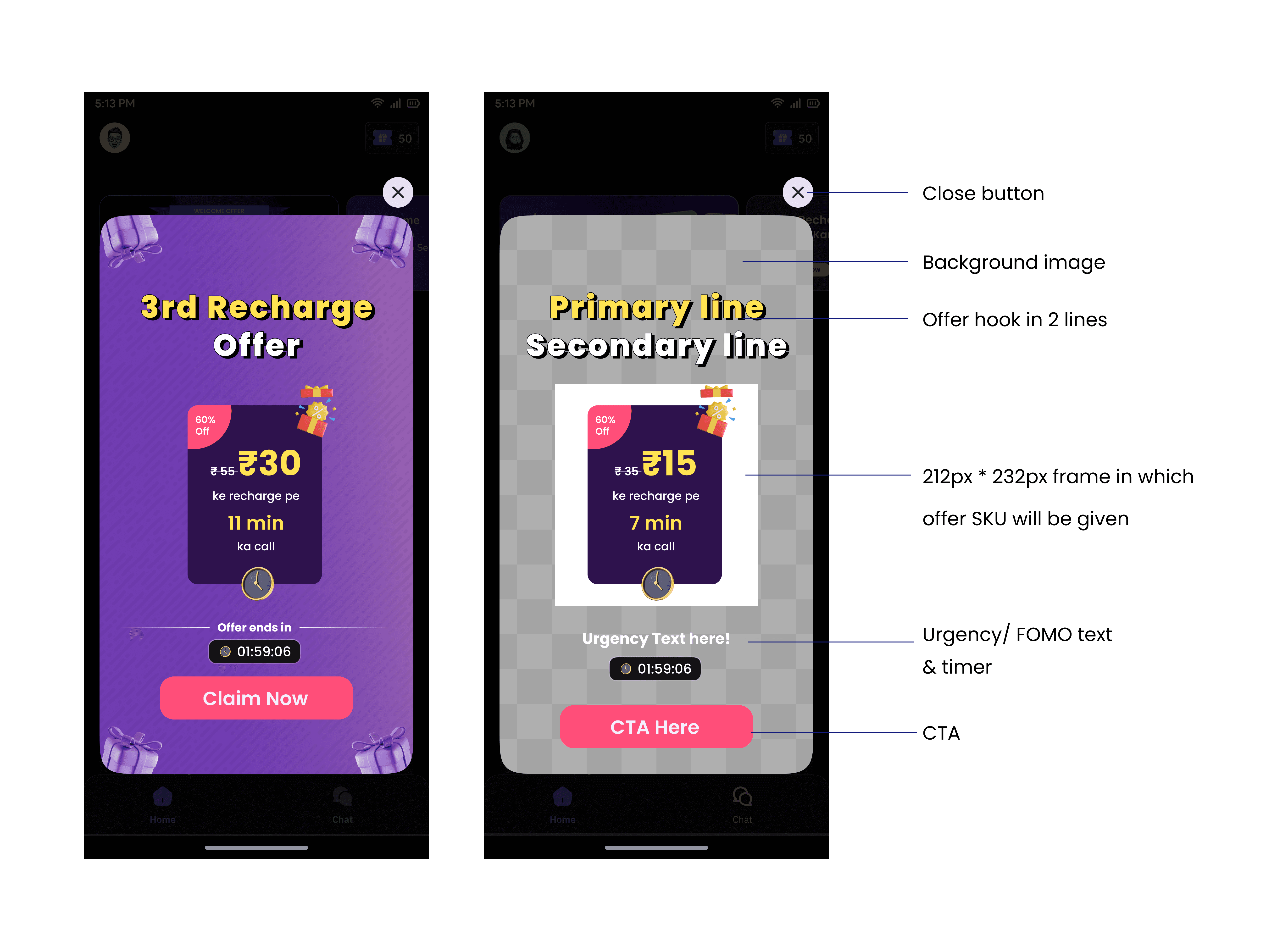
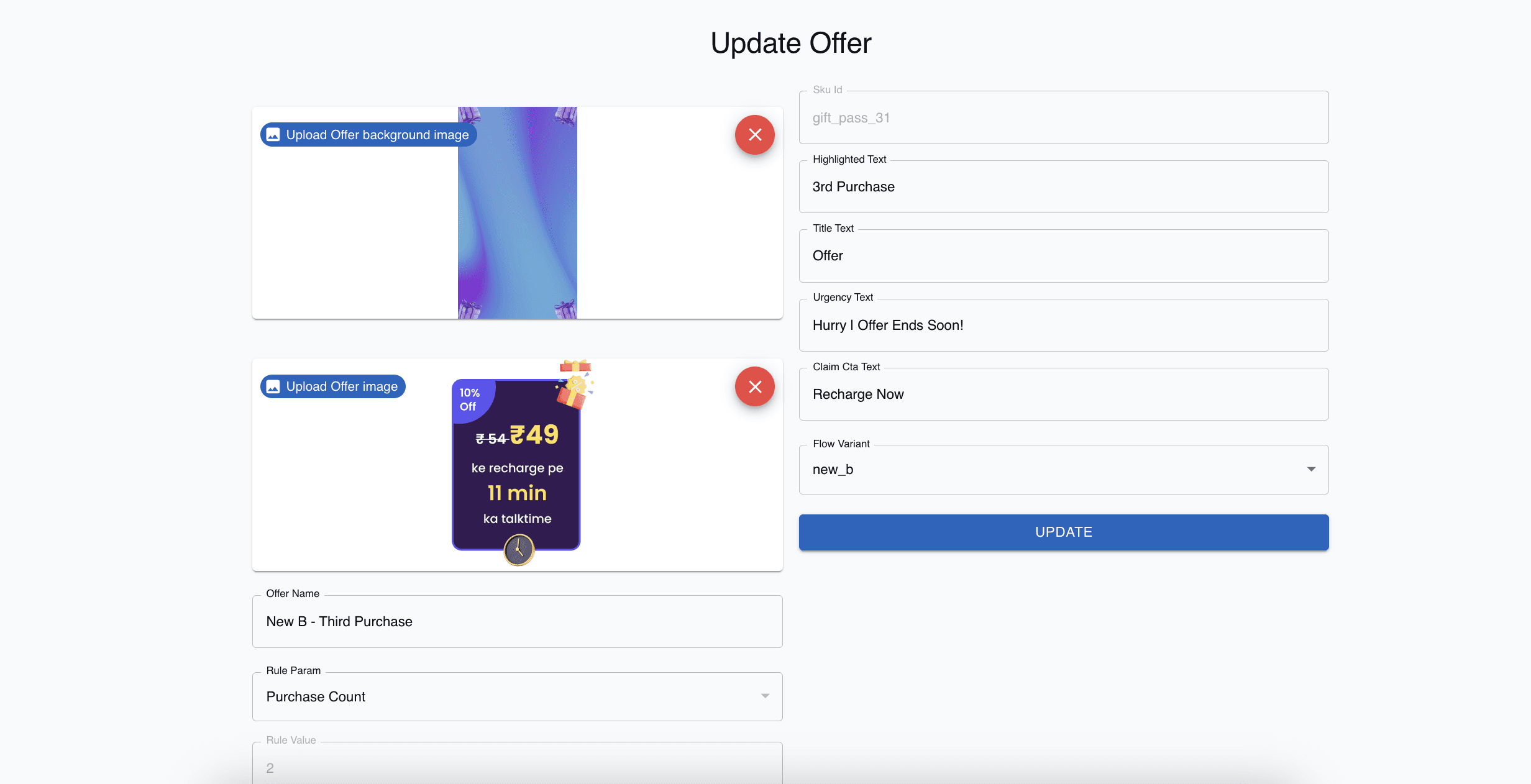
This is what the admin panel looked like, where anyone could just push a new offer, the only dependency on the backend was to just generate a new sku id, reducing the time to push offer, and increasing our pace to experiment.
Why we did it?
Impact

But after few weeks down the release, we hit a plateau in terms of ARPPU, and recharge funnel conversions. Hence we had to move to the next step.
⚙️ Step 2: Introducing Paid-First Call & Recharge Ladder
Problem
Despite faster testing, retention plateaued. Data and user interview insights showed that free first call led the users to expect no-cost interactions and they were constantly looking for more free calls after the first one, hurting 2nd-recharge conversion (< 20 %).
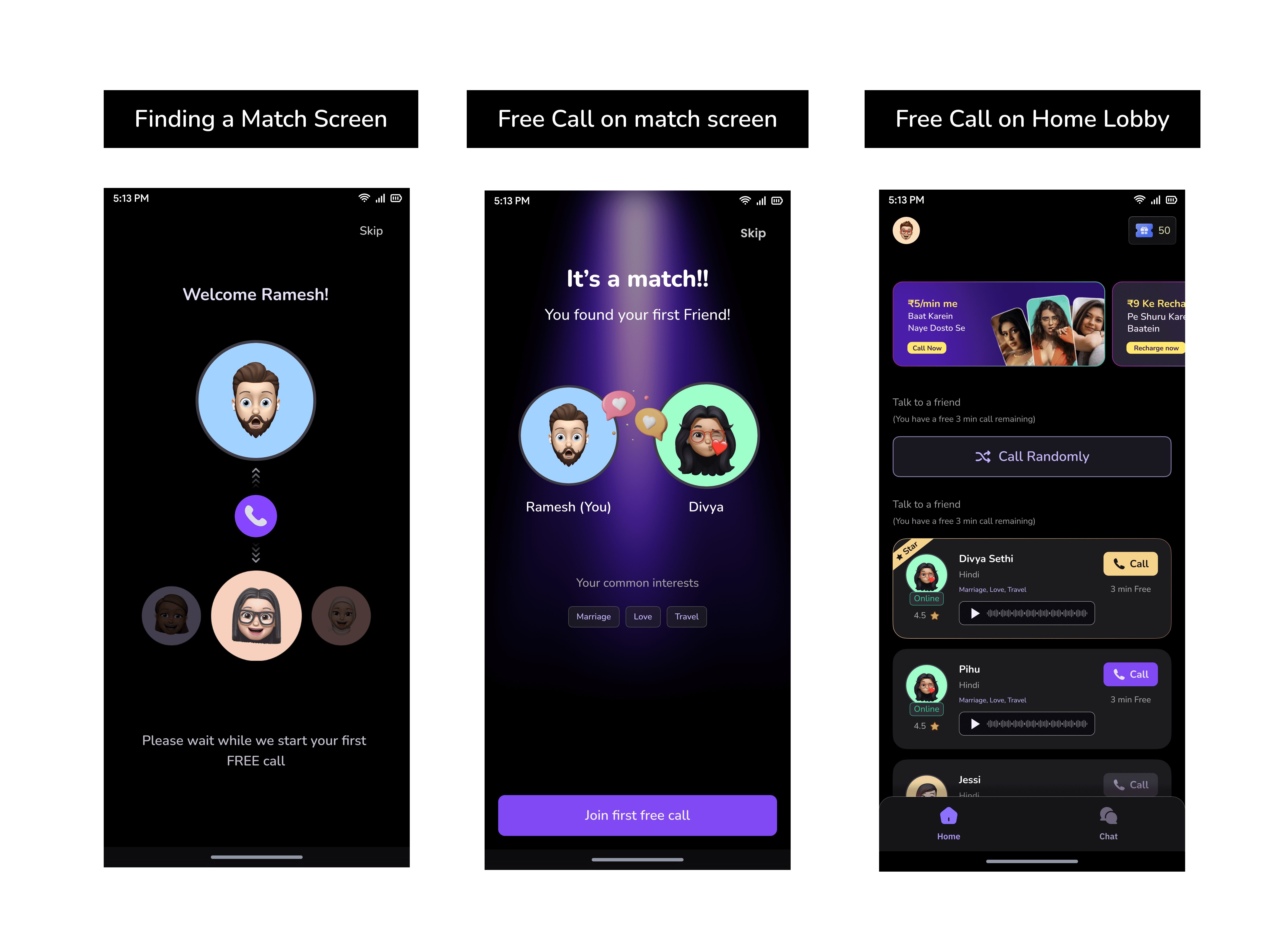
Solution
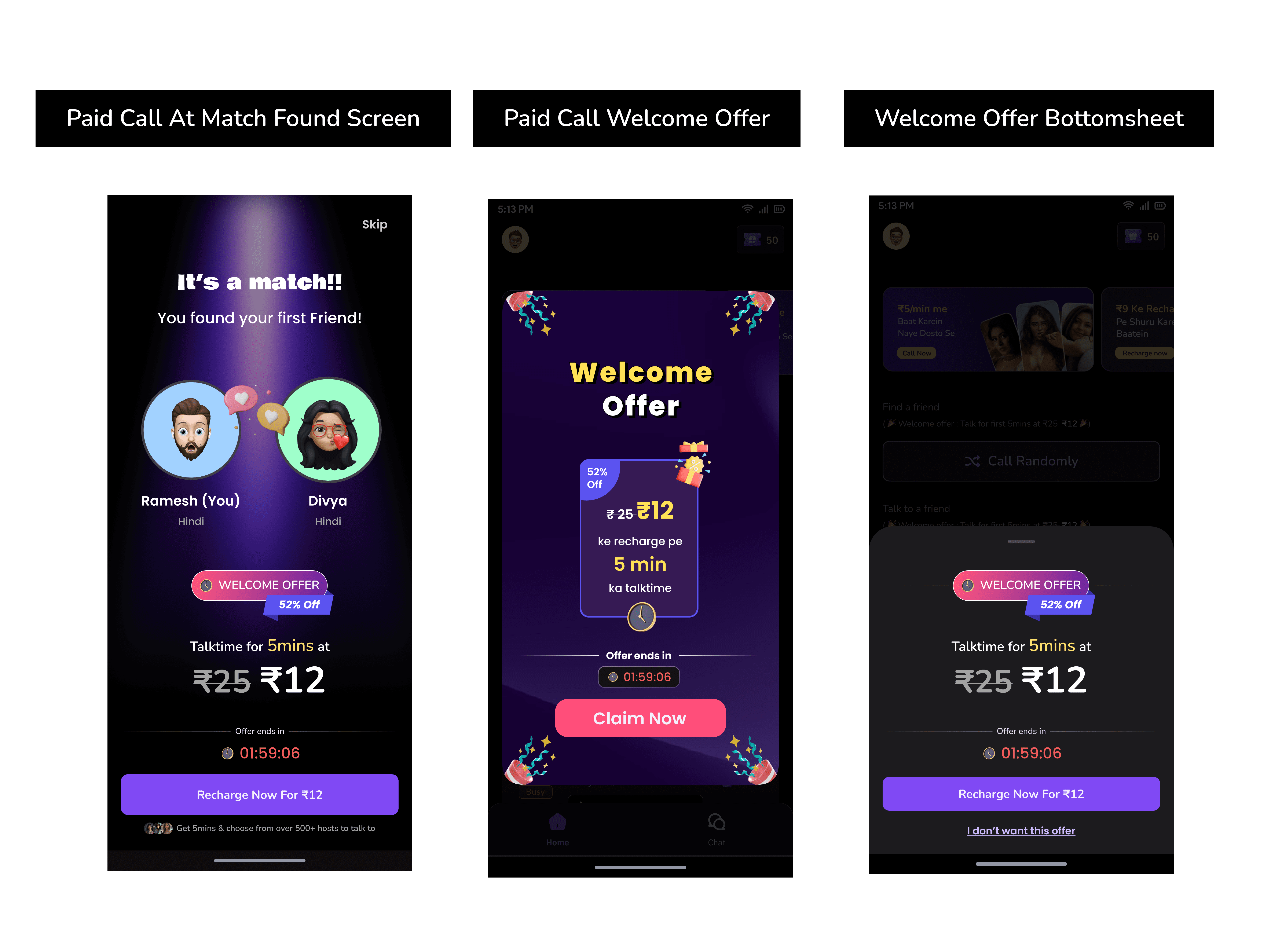
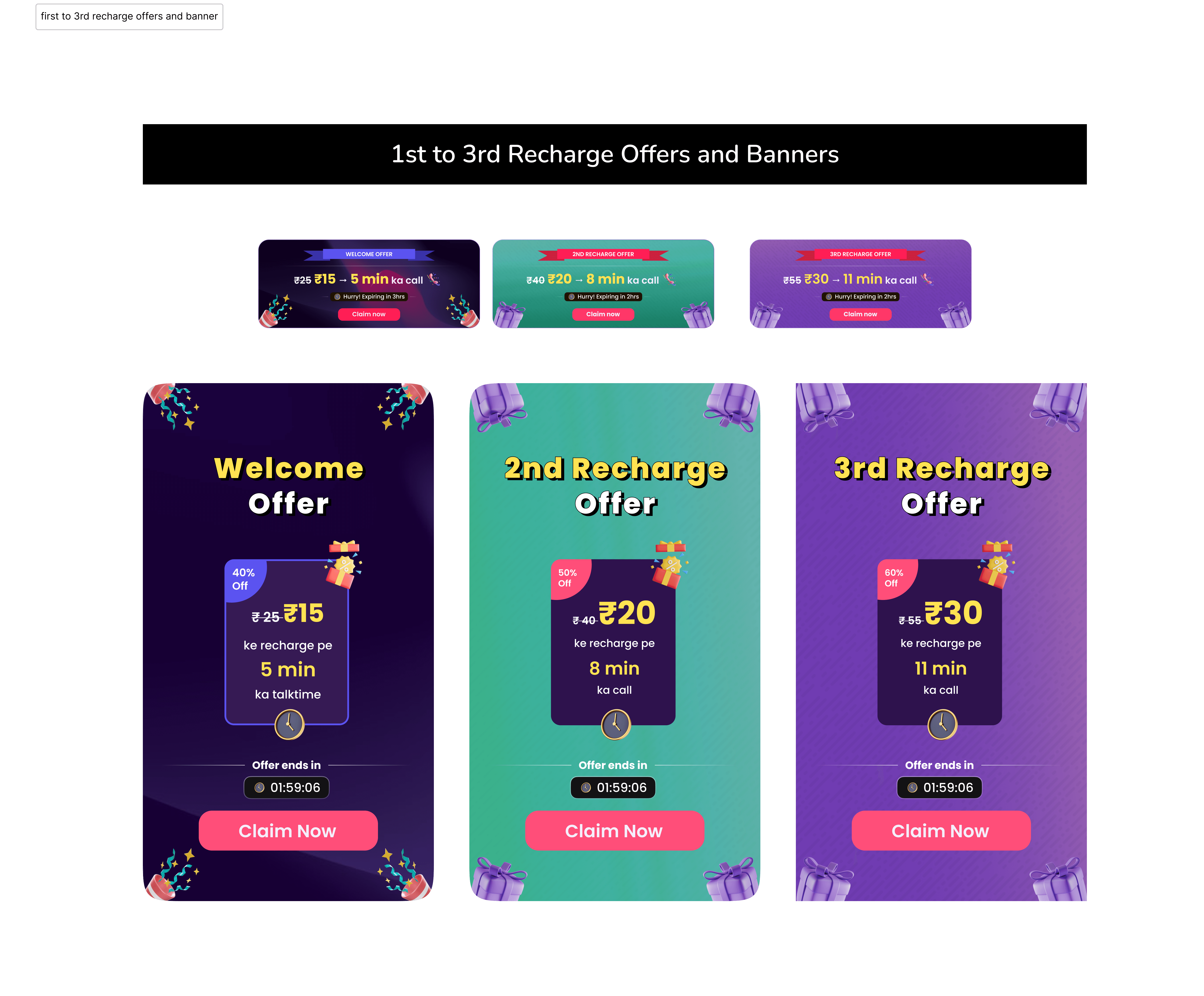
We replaced the free call with a ₹25 → ₹12 Welcome Offer shown during creator matching.
This triggered a low-friction first payment. Then, we designed a 1st→4th Recharge Ladder with progressive offers unlocking at each recharge to form habit loops. So that the user turns into a power user.
Why we did it?
Impact
Step 3 — Segmenting Users by Behavior
Problem
After early growth, ARPPU stalled. Generic offers didn’t scale across all users, and ₹20 spenders and ₹500 power users responded differently.
Solution
Using Mixpanel cohorts, we introduced segmented offers:
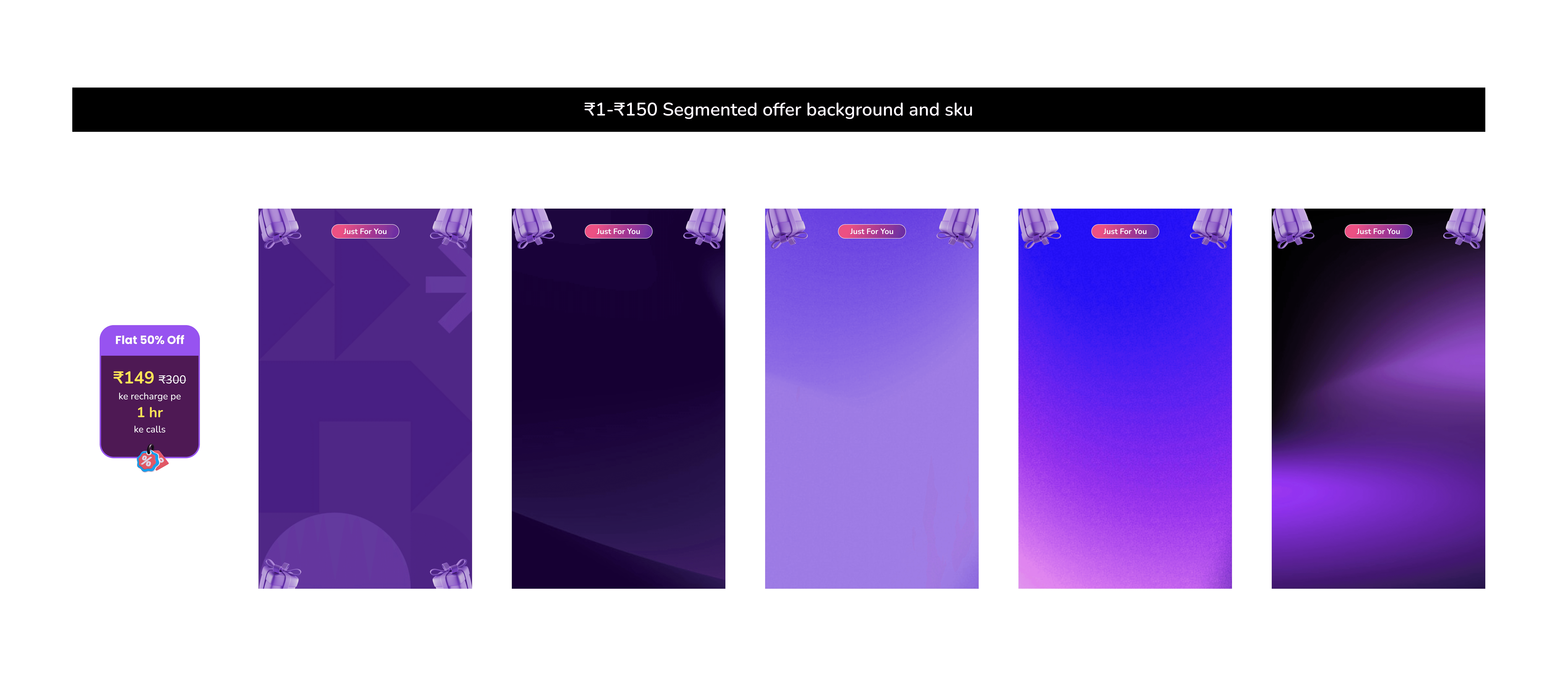
₹1–150 → light users (friendly copy, low urgency)
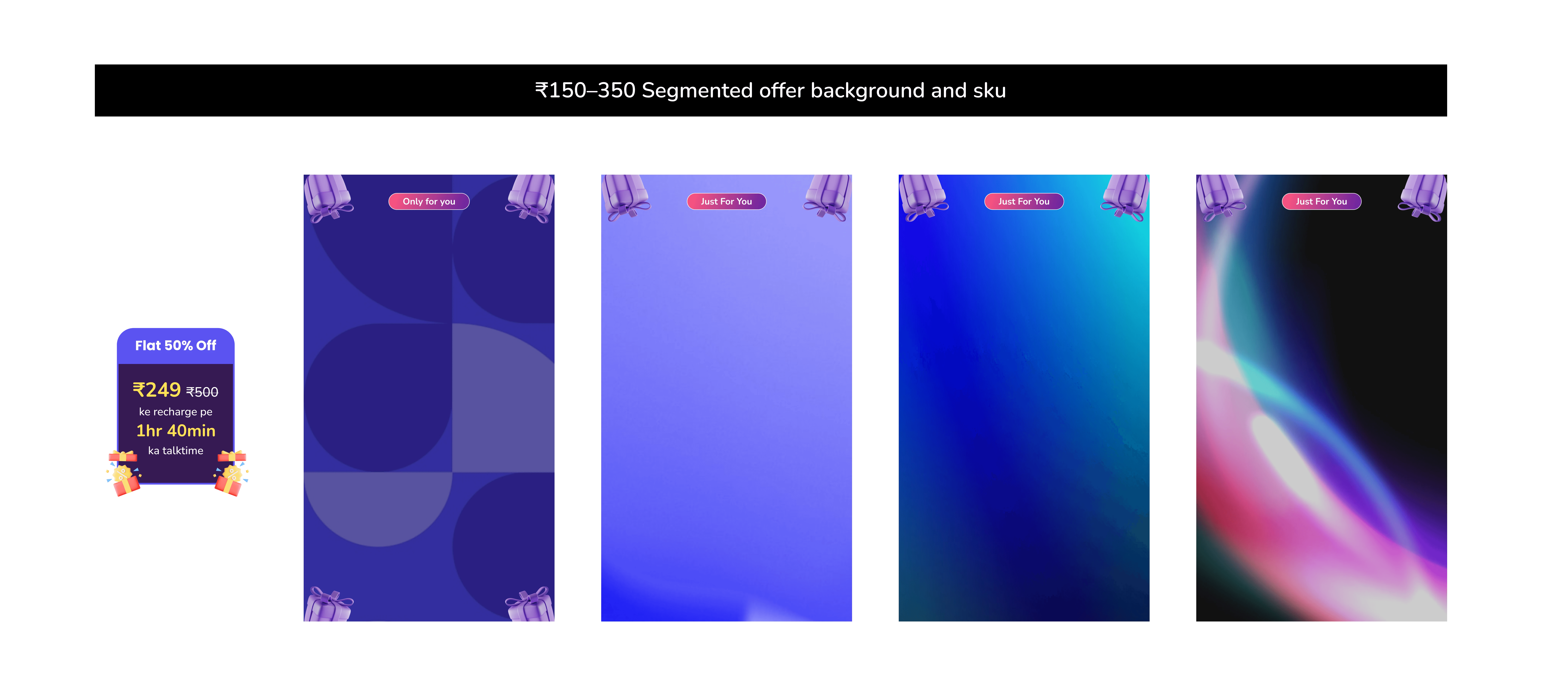
₹150–350 → growing users (balance discount vs cashback)
₹350–500 → loyal users (time-bound premium offers)
₹500+ → power users (high-value cashback rewards)
Each segment got unique visuals and expiry logic. And for that i templatized the offer, and sku design so that people from ops or product team would use the correct offer for the right cohort in the admin panel.
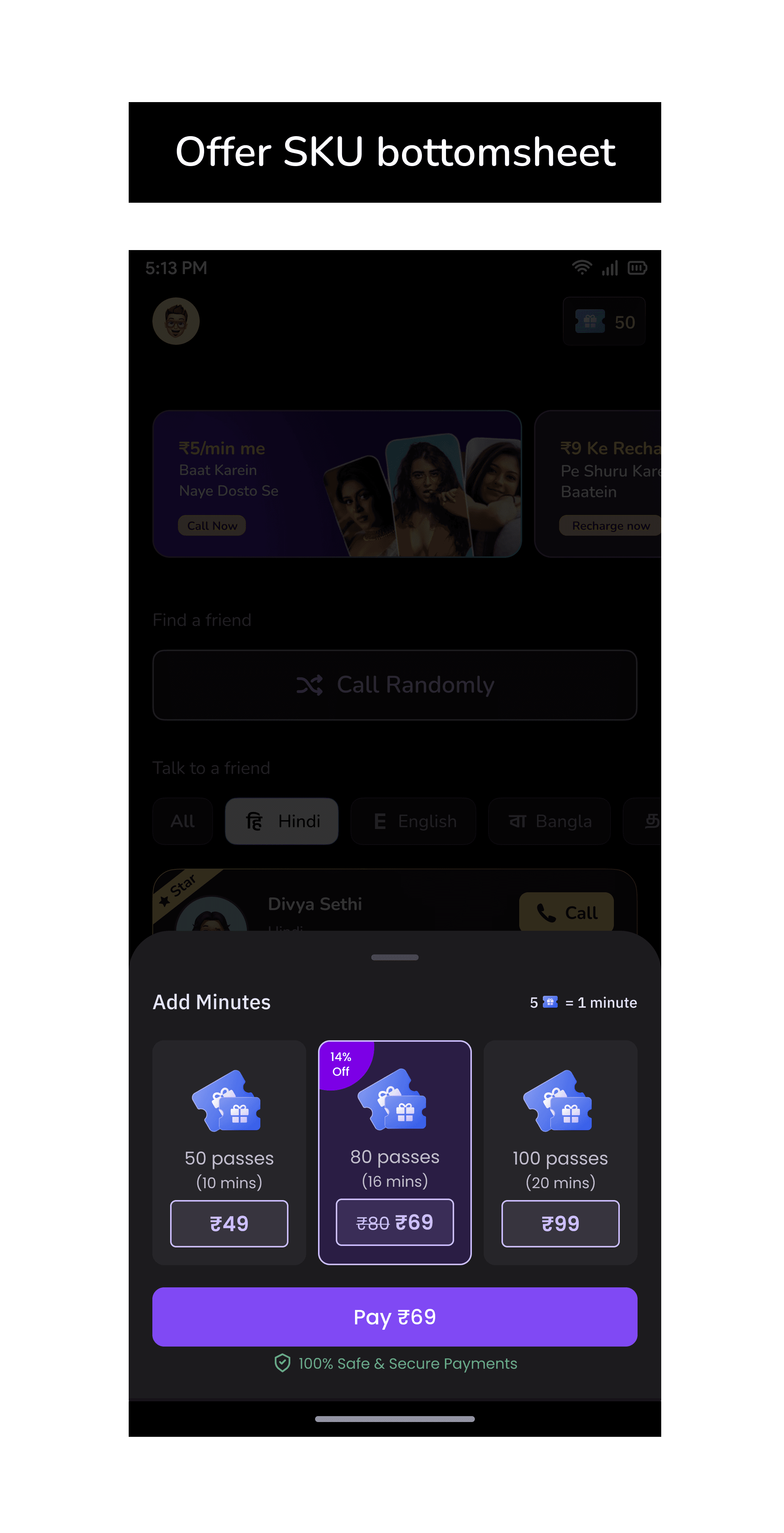
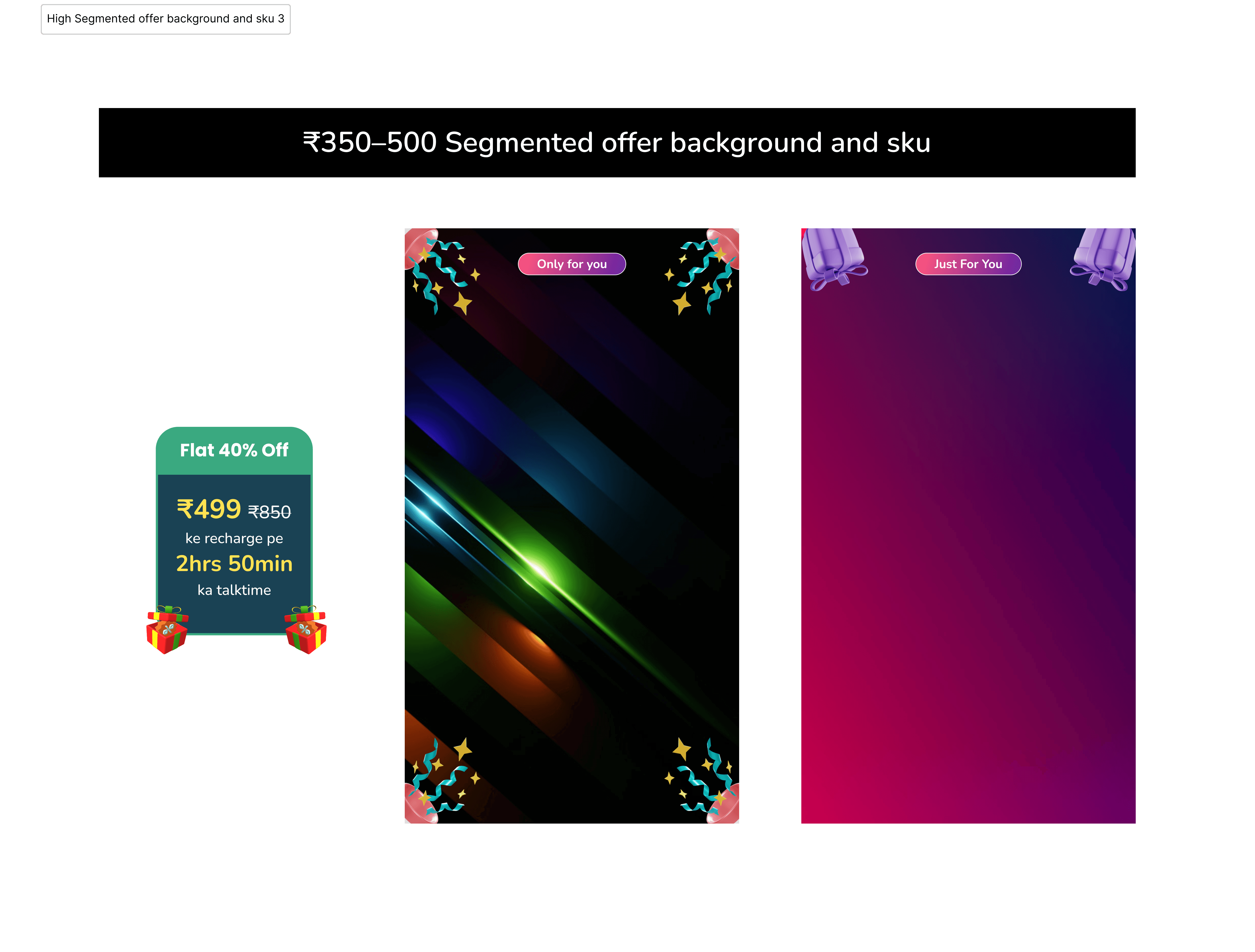
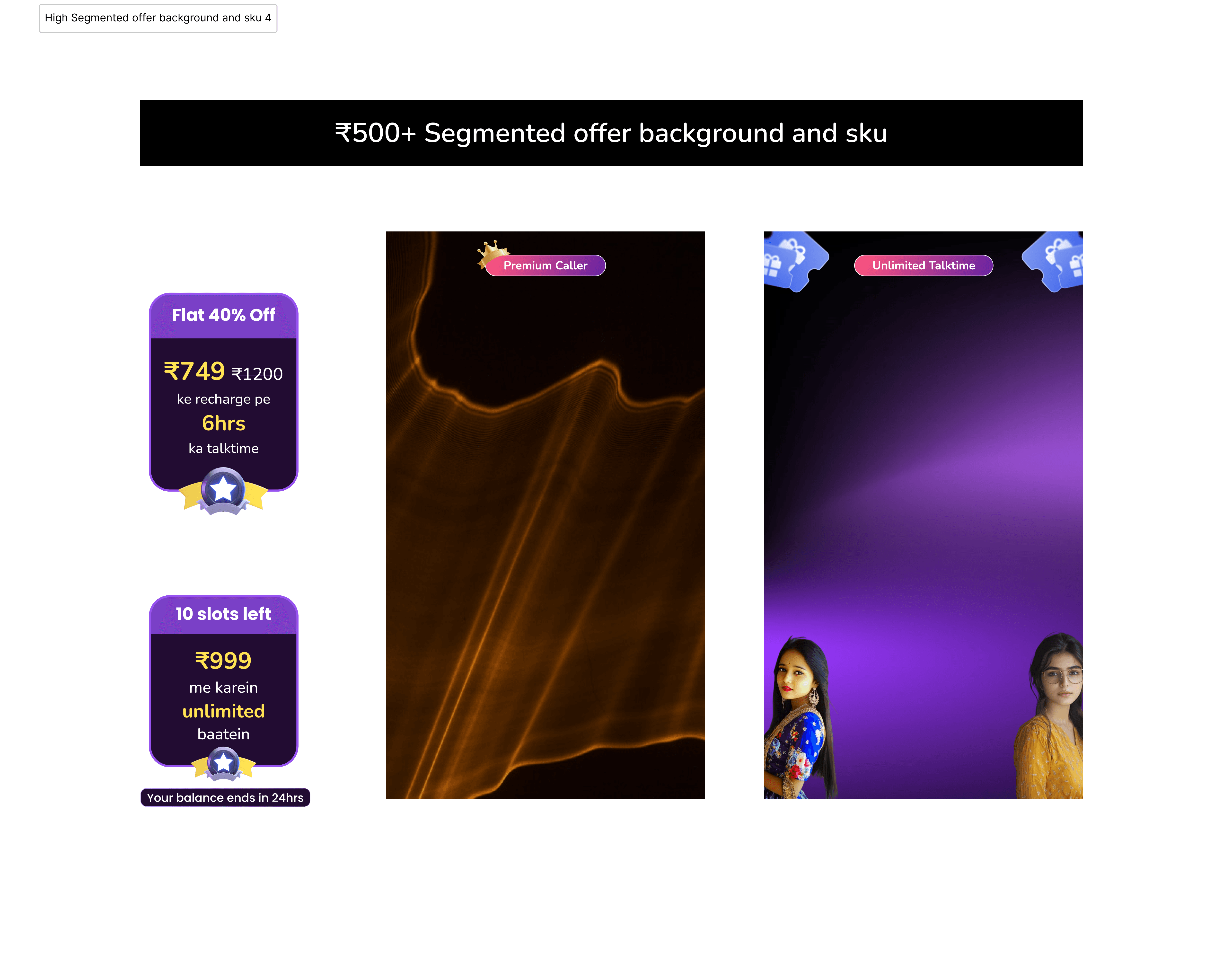
The recharge bottom sheet displays three SKUs in ascending order, with the middle one carrying an active offer to leverage the anchoring effect. Only one SKU is promoted at a time to maintain clarity and focus. The entry-level SKU dynamically adapts to a user’s last purchase or lifetime value, gradually nudging them toward higher purchase tiers without causing friction.
To streamline operations, I also templatized the background and SKU images for different cohorts, allowing anyone to upload offers directly through the admin panel. This reduced design dependencies and ensured consistent, on-brand visuals across all campaigns.
Why we did it?
Impact
Step 4 — Redesigning the Recharge Lobby
Problem
Recharge SKUs looked identical, hiding value differences. Users defaulted to the cheapest pack. Pricing also lacked transparency in terms of best deal and the minutes equivalence visible.
Solution
We redesigned the entire purchase lobby:
Smaller gift-pass icons → focus on numbers of passes
Added slashed price + “Save X %” / “Extra Y Passes” badges
Introduced cashback tiers and timers
Defined SKU Domination Logic — progressive ladder where higher value packs get better per-minute pricing to nudge upgrades
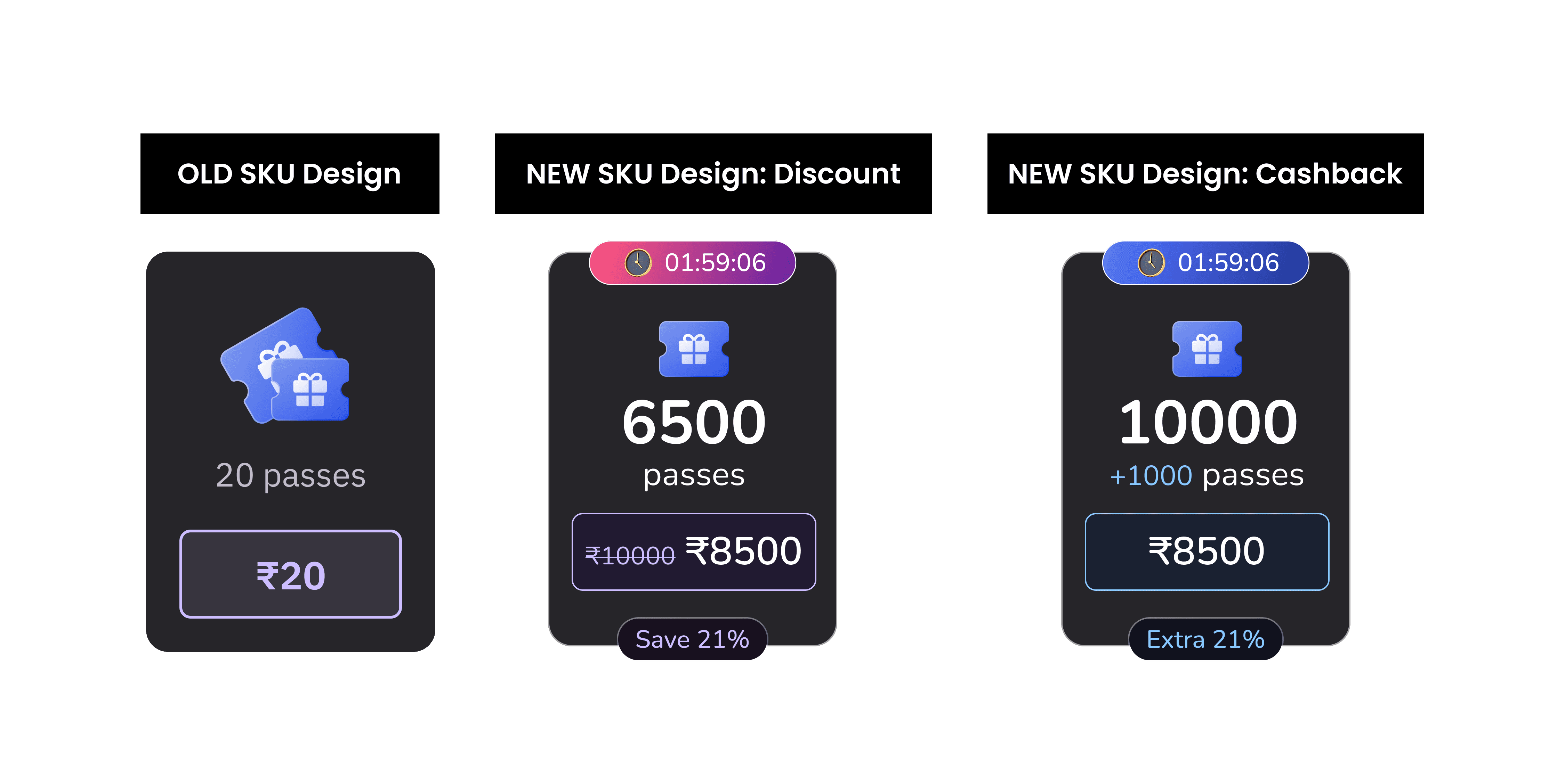
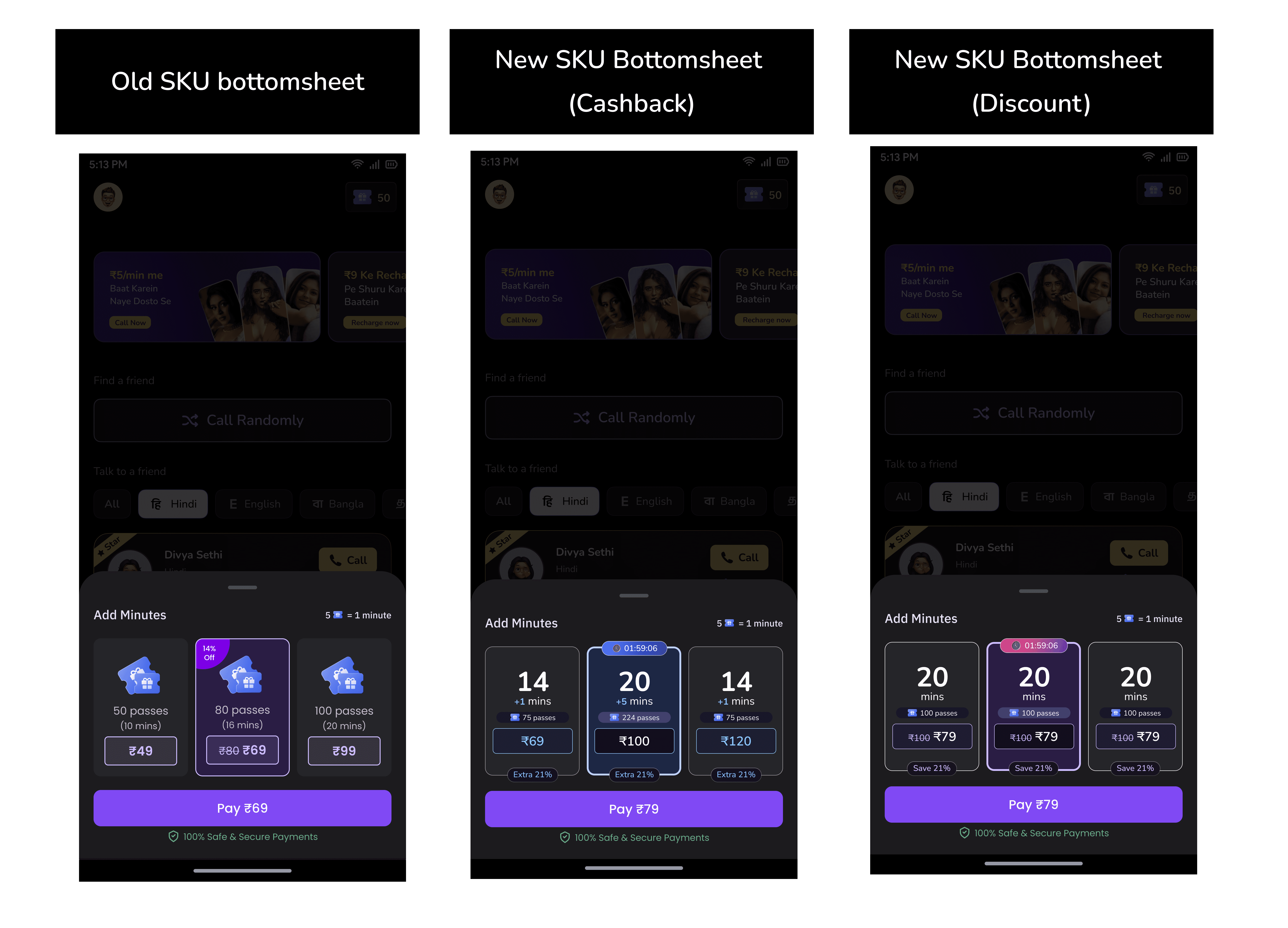
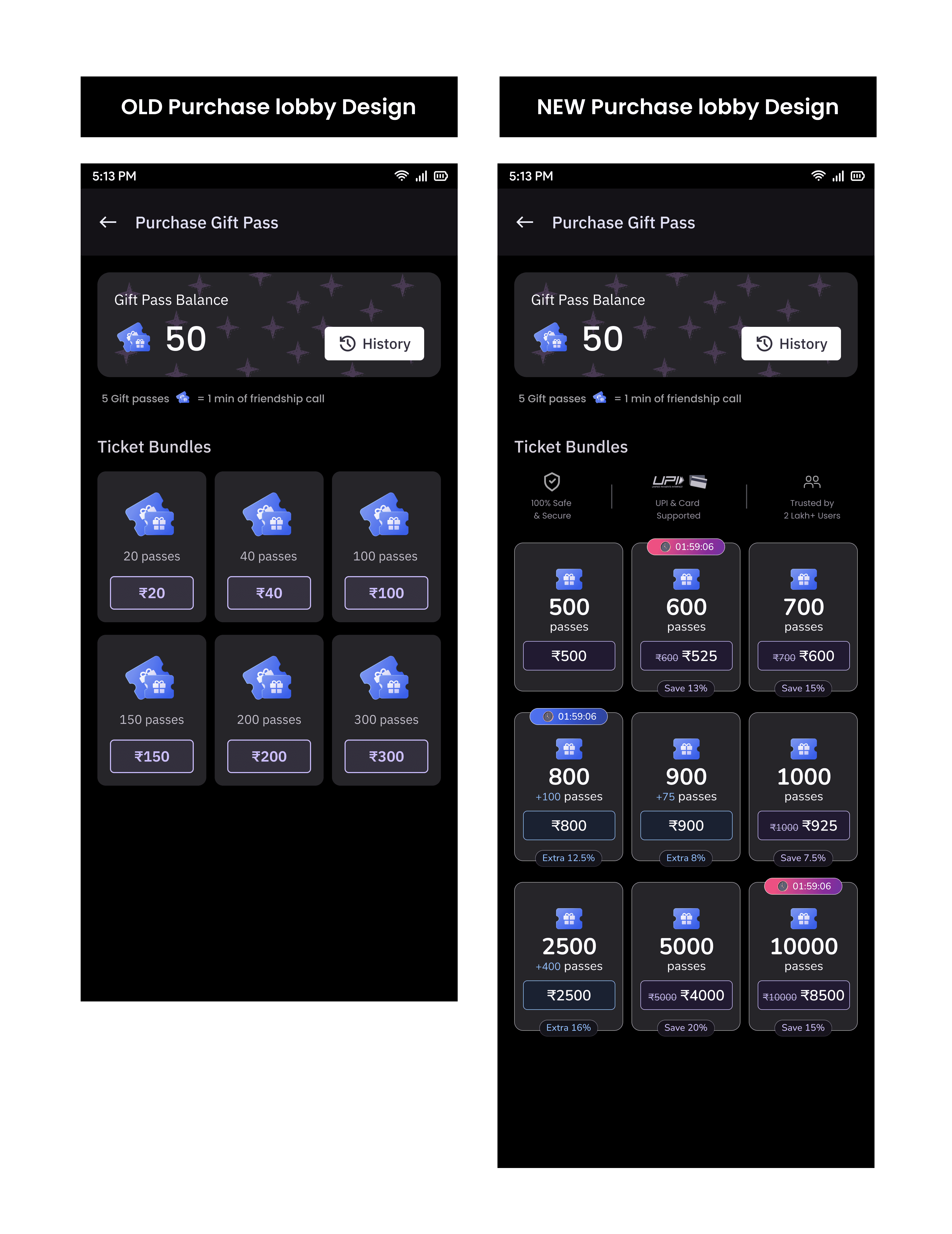
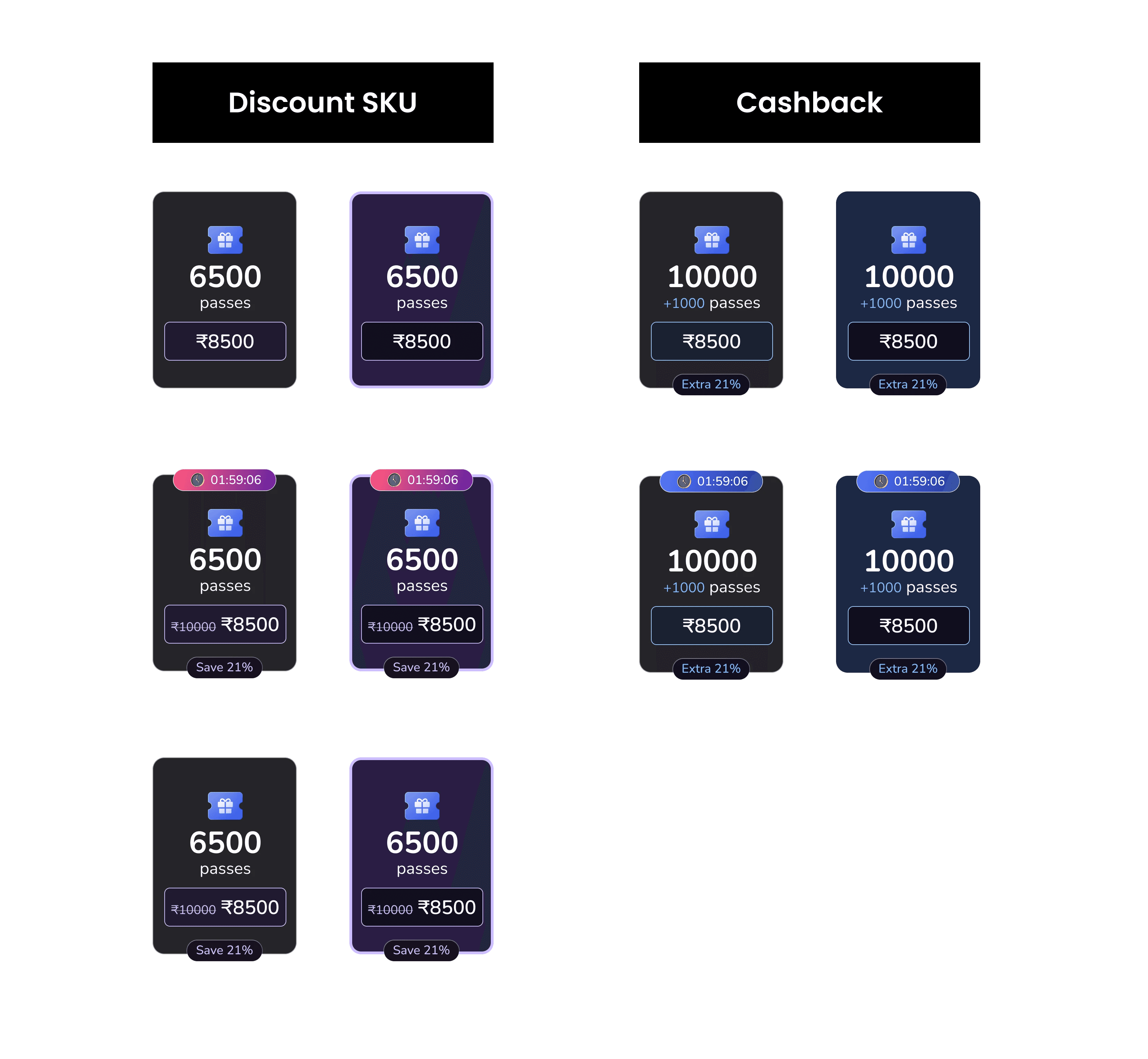

We identified confusion around perceived value across both recharge pathways — the three-SKU bottom sheet and the purchase lobby. To address this, we revamped the SKU layout and lobby design to make savings clearer and introduced cashback-based offers alongside discounts. This not only improved value perception but also nudged users toward higher payment tiers, boosting ARPPU. Finally, we refined the purchase flow to reassure users of the value they were gaining at each step — whether through a discount or cashback — while adding subtle FOMO nudges when they attempted to go back.
Why we did it?
Impact